




















Let’s face it- most new things are full of toxins. Clothes, cabinets, couches, carpets- all of them. Now, while we don’t need to become terrified hermits to avoid every possible toxin, it is important for the health of our families that we’re conscious of this concern and do what we can to limit our exposure to the VOCs and chemicals that are in most new products. For us, that means buying used often, and if we are buying new, doing research to find items that will fit our budget but not fill our home with pollutants.
When we bought this house from our friends and had it moved to our land, we had the option to take or leave the one-room addition that they built on for the use of an office. We decided to take it (and received the thrilling experience of moving it, hanging over the sides of my dad’s trailer, down the freeway…) with hopes to turn it into a schoolroom.
The addition sat unused for months until we could get it connected back to the house; when we finally did get it attached, my mind started dreaming up elaborate plans of a Pinterest-worthy room— an elegant rug, matching desks or a rustic farmhouse dining table, a gigantic chalkboard and beautiful educational artwork, cute baskets here and there, a Montessori toddler area with a beautiful wood shelf. My vision was perfect… except for its potential price tag. I’ve shopped around enough for non/low-tox furniture that i know it comes with a high cost (heck, even target and walmart furniture, made completely of particle board and loaded with toxins, can be super pricey).
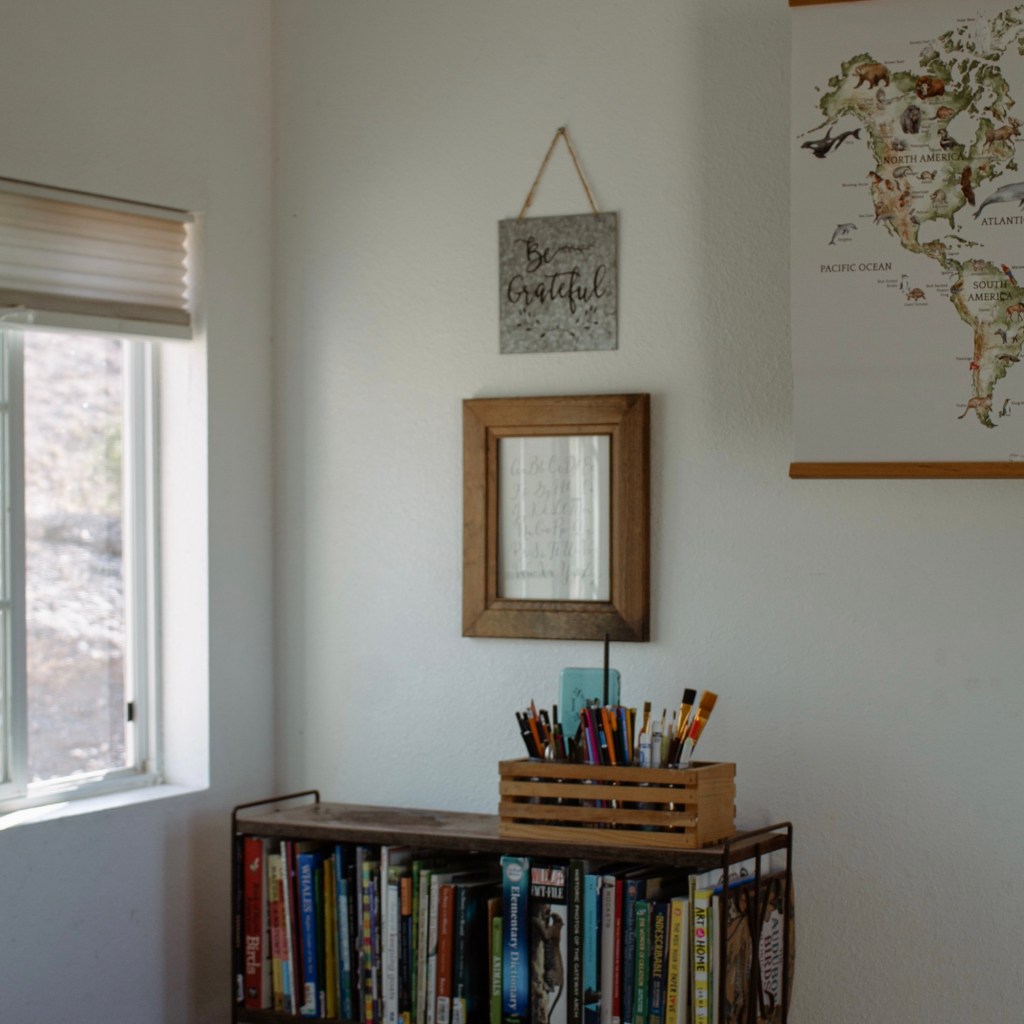
So I went to work deciding what the essentials were and researching options that would allow us to make this room beautiful, functional and also affordable.
The essentials:
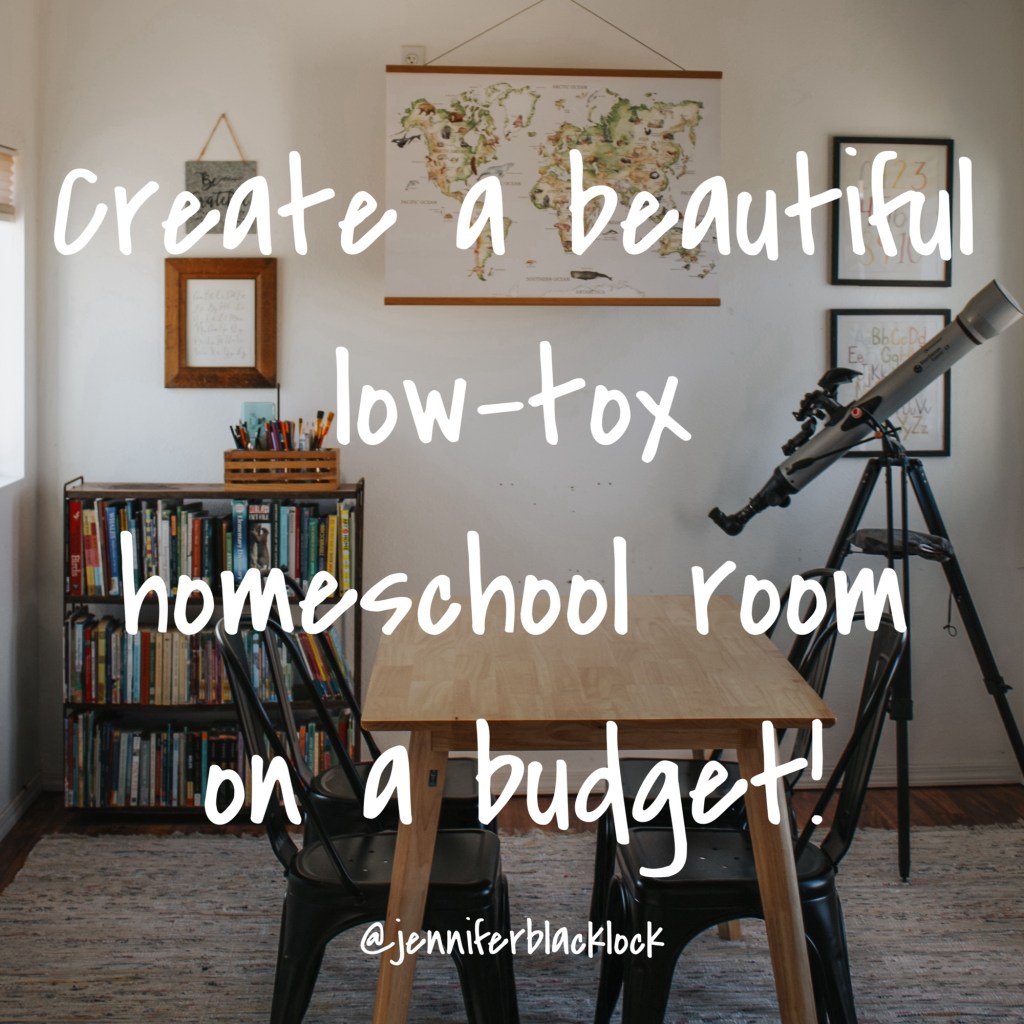
Table and chairs
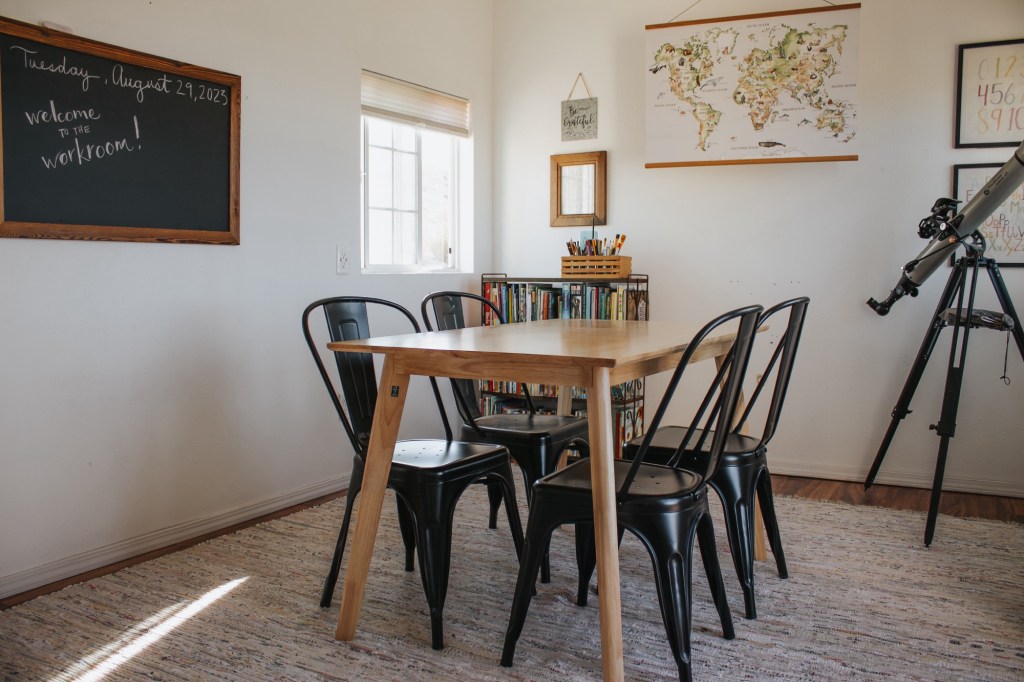
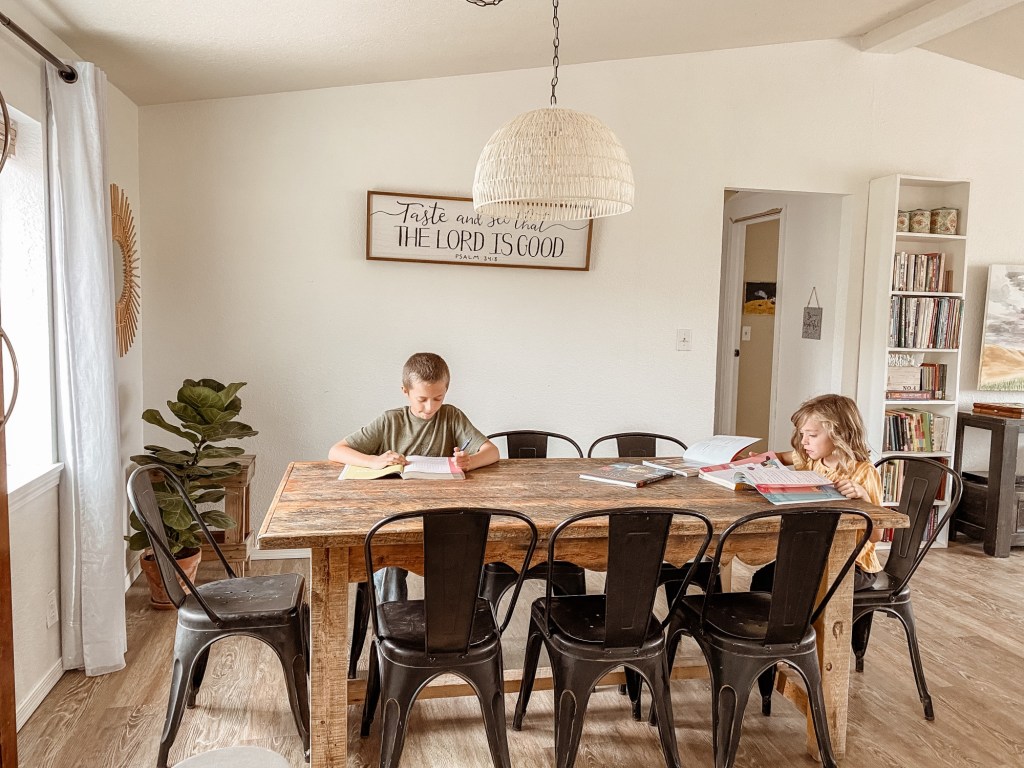
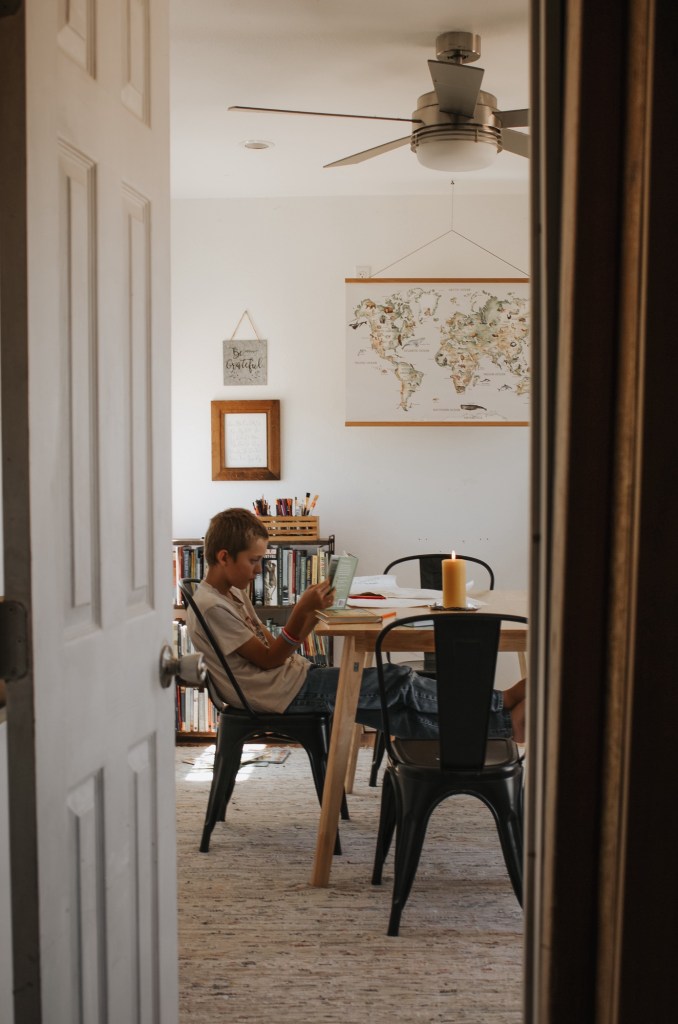
If you could only have one item of furniture in a schoolroom, I guess a table would have to be it. This is the gathering place, the area where lessons are learned and supplies are passed and pencils are set. I considered desks because they look so cute and “school-y” and would possibly help the kids focus better, having their own spaces, but in the end it was the budget that caused a table to win. And I do think there’s something so valuable in gathering around a table together, even if one person is working on math, another writing, and another doing a craft, we’re still often interacting and conversing. These moments offer the opportunity for connecting and forming healthy attachments.
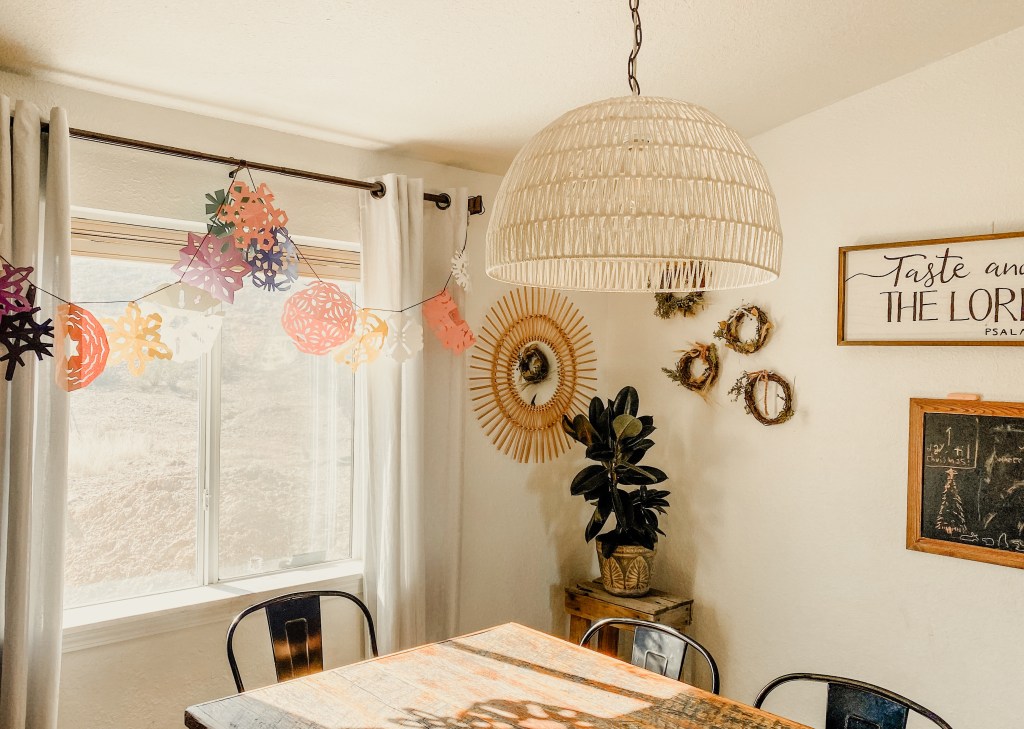
This is the table we chose. It’s solid wood (one thing to avoid in toxin-aware shopping is “wood” thats not solid wood, aka particleboard, MDF, chipboard. These are full of VOCs from glues, solvents, and formaldehyde) and only polished, not stained which is great (stains and paints= toxic). It’s also FSC certified (forest stewardship council). Besides that, it’s simple and lovely.
The chairs we chose are the ones that basically everyone has in their schoolrooms and their airbnb’s and restaurants. I didn’t realize they were so popular until we traveled recently to Missouri and every single place we went had the same chairs in different colors. They’re metal, so, non-toxic. They are painted, but thats not a huge concern as they will off-gas quickly, if not already (depending on how long ago they were manufactured).
Rug
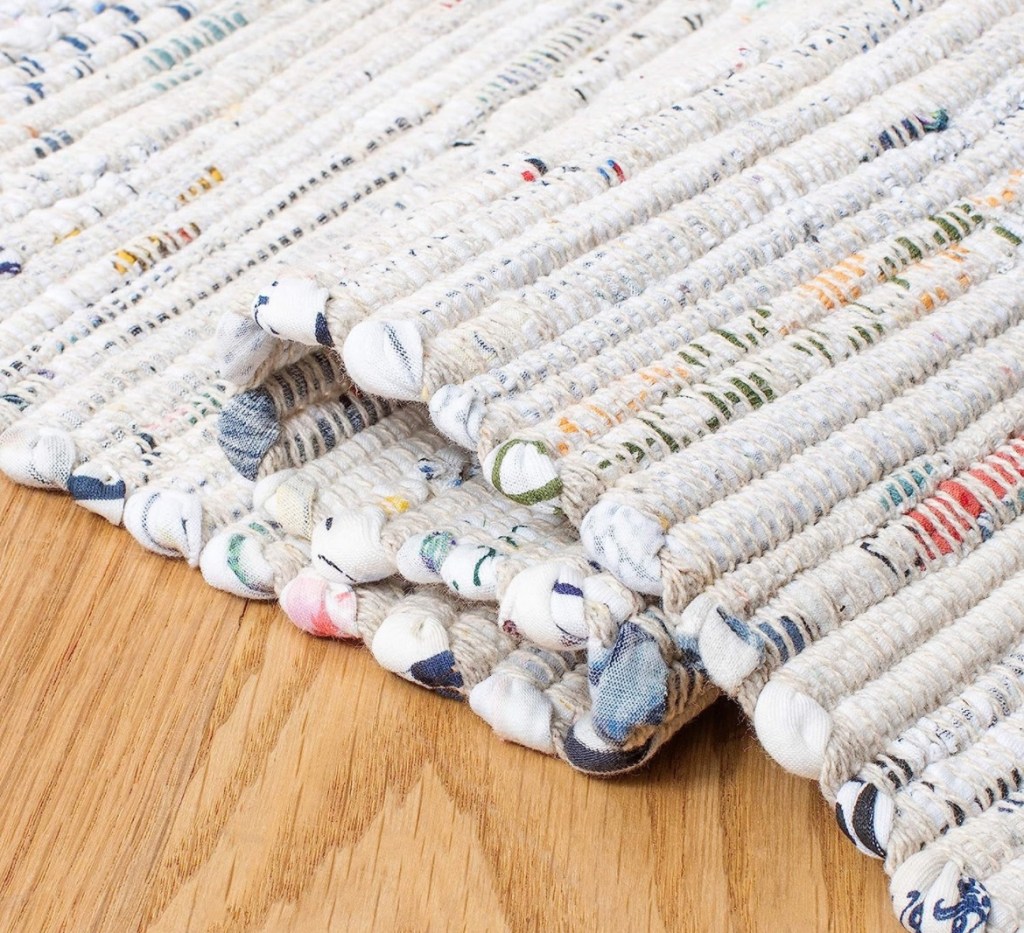
This is the tough one. Everyone knows that “new carpet smell”, well that’s dangerous chemicals that last and continue to emit toxins in the air for years. A rug just makes a room feel complete, though, and it’s not something I wanted to pass on. The most important thing to look for in a rug is the material its made with. Natural materials like cotton and wool are obviously going to be much safer than synthetic like nylon and polyurethane. Still they can have hidden things like persticides and harsh chemicals used in the washing and dying process. I chose this beautiful chindi-style rug because it’s 100% cotton, doesn’t have a lot of dye, has no backing (another hidden place for glues and chemicals), and the reviews were decidedly positive about the smell (something that cannot be said of most rugs). Because of the material and structure, this rug can be washed in the washing machine (great for washing out residual chemicals from manufacturing). The design is also very “kid-friendly” (if you know what I mean); because of the variegated pattern and multiple colors, it isn’t likely to show every spot and stain that’s bound to end up there. Still it has a very clean and classic look.
Chalkboard
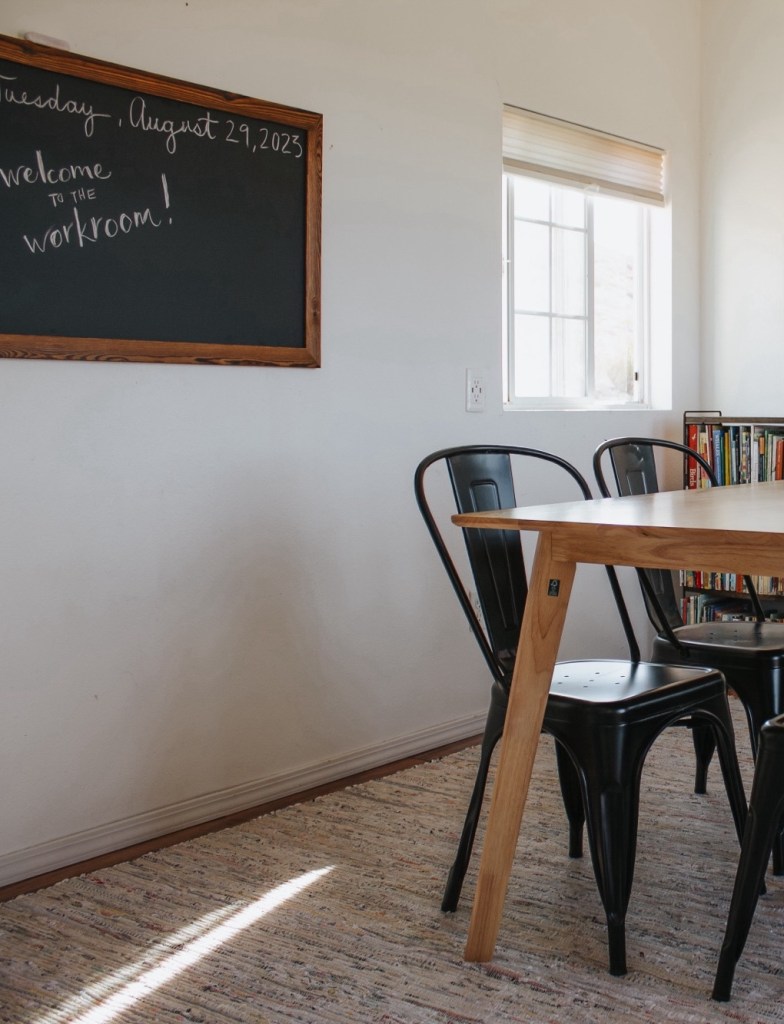
We recently hosted a Bible study at our house, and someone who’d never been here before commented on how much it looked like a homeschooler’s house- his main reasons: books and a chalkboard.
Of course theres no rule that a homeschool house must have a chalkboard, but it does certainly give a “vibe” and is very useful- we always keep the date and the verse we’re learning that week on the board, and we often end up spontaneously doing spelling tests or math problems (like figuring out how old the kids are in minutes). Also its great for vocabulary words, writing prompts or recipes, drawing out things like scale, proportions, tally marks, etc. Our chalkboard in the dining room is used everyday and frequently runs out of space, so I knew I wanted a slightly larger one for the workroom. This chalkboard is the one we decided on. I love the style of it and chose it for its solid wood frame but neglected to notice that the backing is particle board. I smelled the chemicals as soon as I opened the box, and had to let it air out outside until its offgassed a bit. In looking further, it seems nearly all the chalkboards I can find have a particle board back. Another option would be to use chalkboard paint from ecos paints on the wall and put a frame around it.
Map

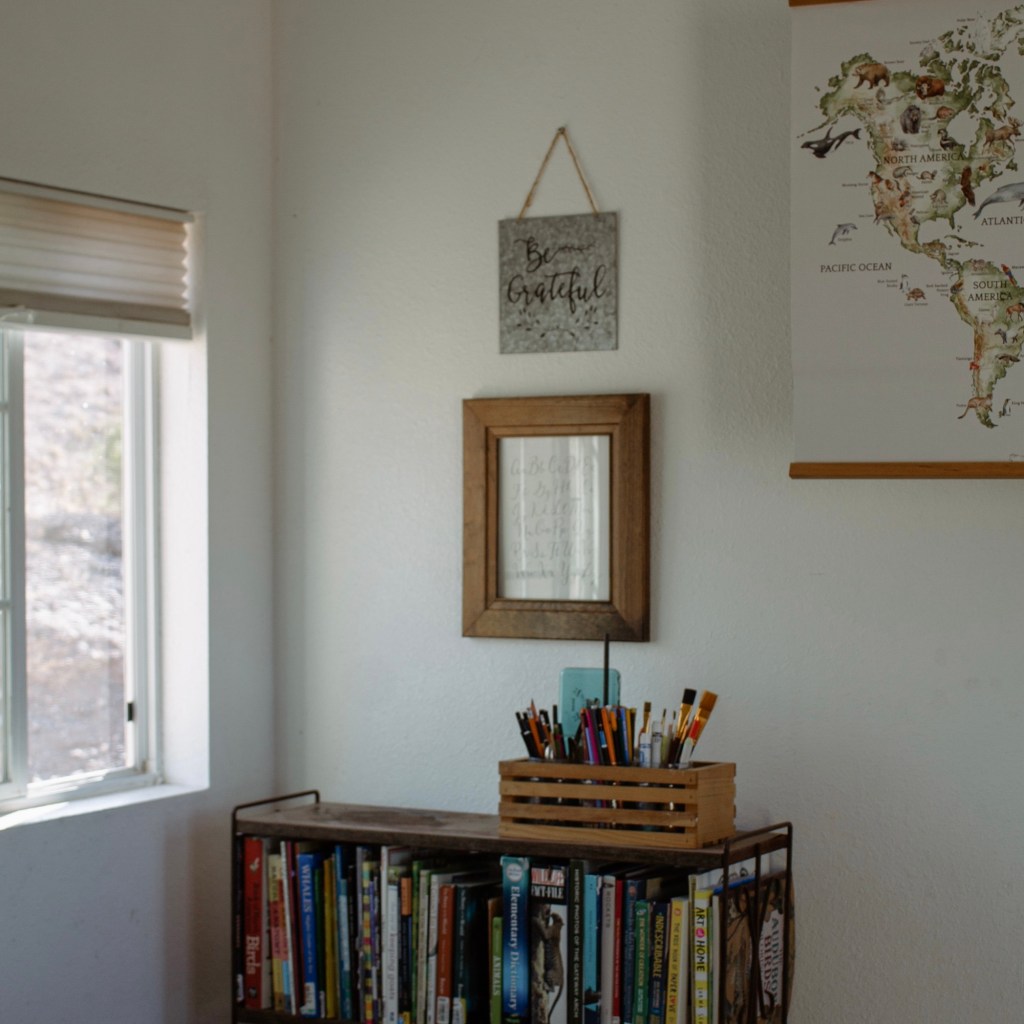
Again, optional and maybe cliche, but a map is such a classic staple for a schoolroom. I love this hanging canvas one we bought! It has the sweetest watercolor painting of various animals in their places in the world and is useful when studying different countries.
Shelving
We already had one small shelf attached to the wall that we’re using for supplies; the bookshelf is thrifted. It’s also surprisingly easy to build your own shelves, and I have two tucked away in corners for extra storage- all you need are 1×12 (or 1×8 or 1×10) boards cut to the lengths you want your shelves; and just screw them together (or use brackets if you’re fancier than me).
Sensory table
This was my toddlers Christmas gift last year and has been so much fun! Our favorite things to put into the two bins are kinetic sand, sand toys, and little tractors.
Art
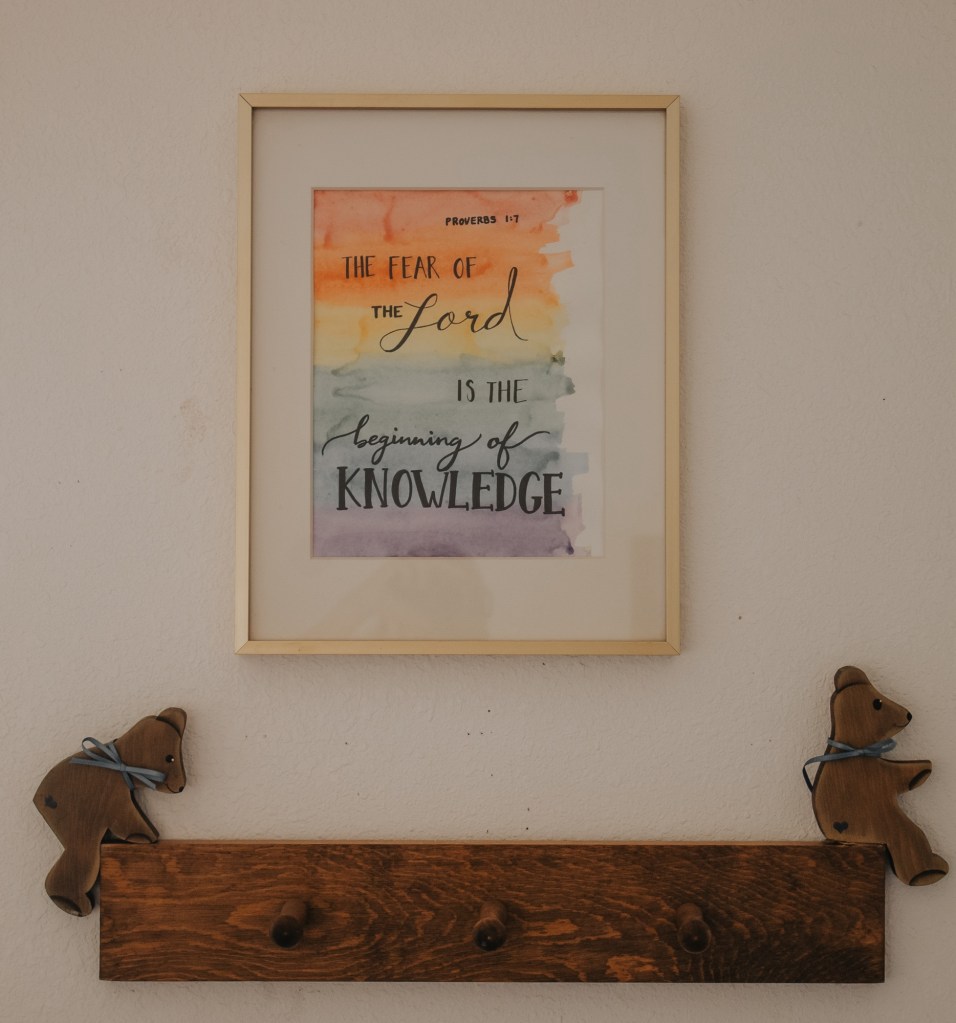
I looked through a ton of adorable “school” prints on Etsy but eventually decided to make my own; and I would encourage you to also! Don’t use the “not an artist” excuse; sketch out the alphabet or some animals or a verse, get out those watercolors, and frame it. It will add a cute (maybe quirky) personal touch to your room.