













I came across this poem this week and think it’s so relevant to today, though it was written in 1577.
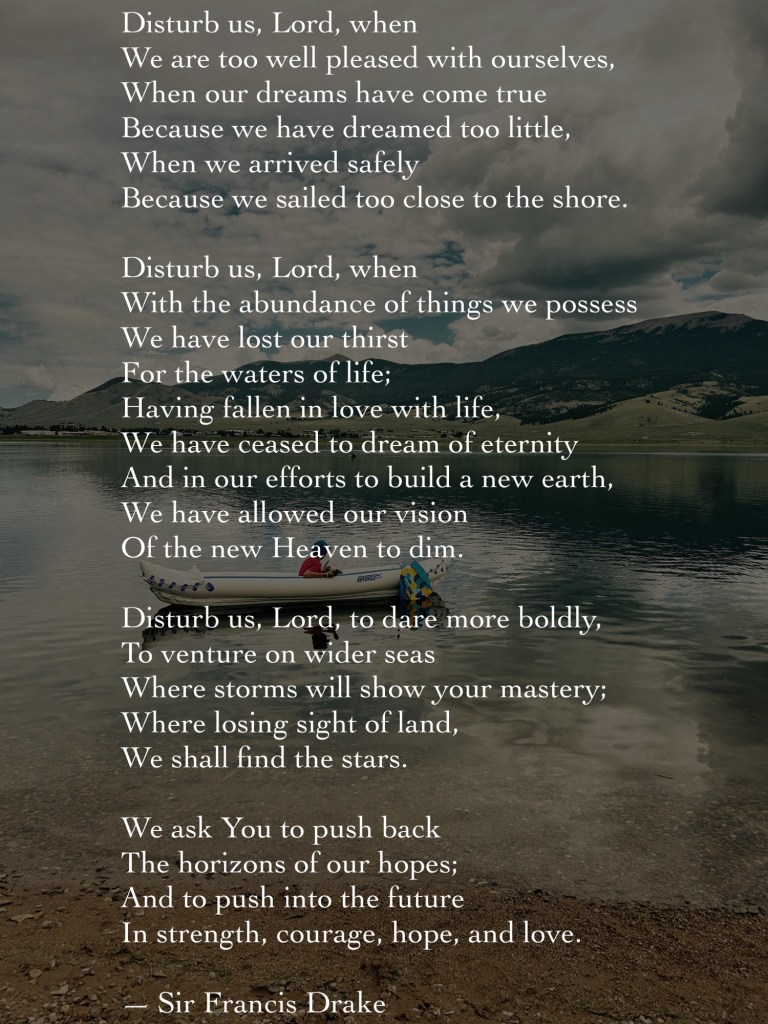
Disturb us, Lord, when
We are too well pleased with ourselves,
When our dreams have come true
Because we have dreamed too little,
When we arrived safely
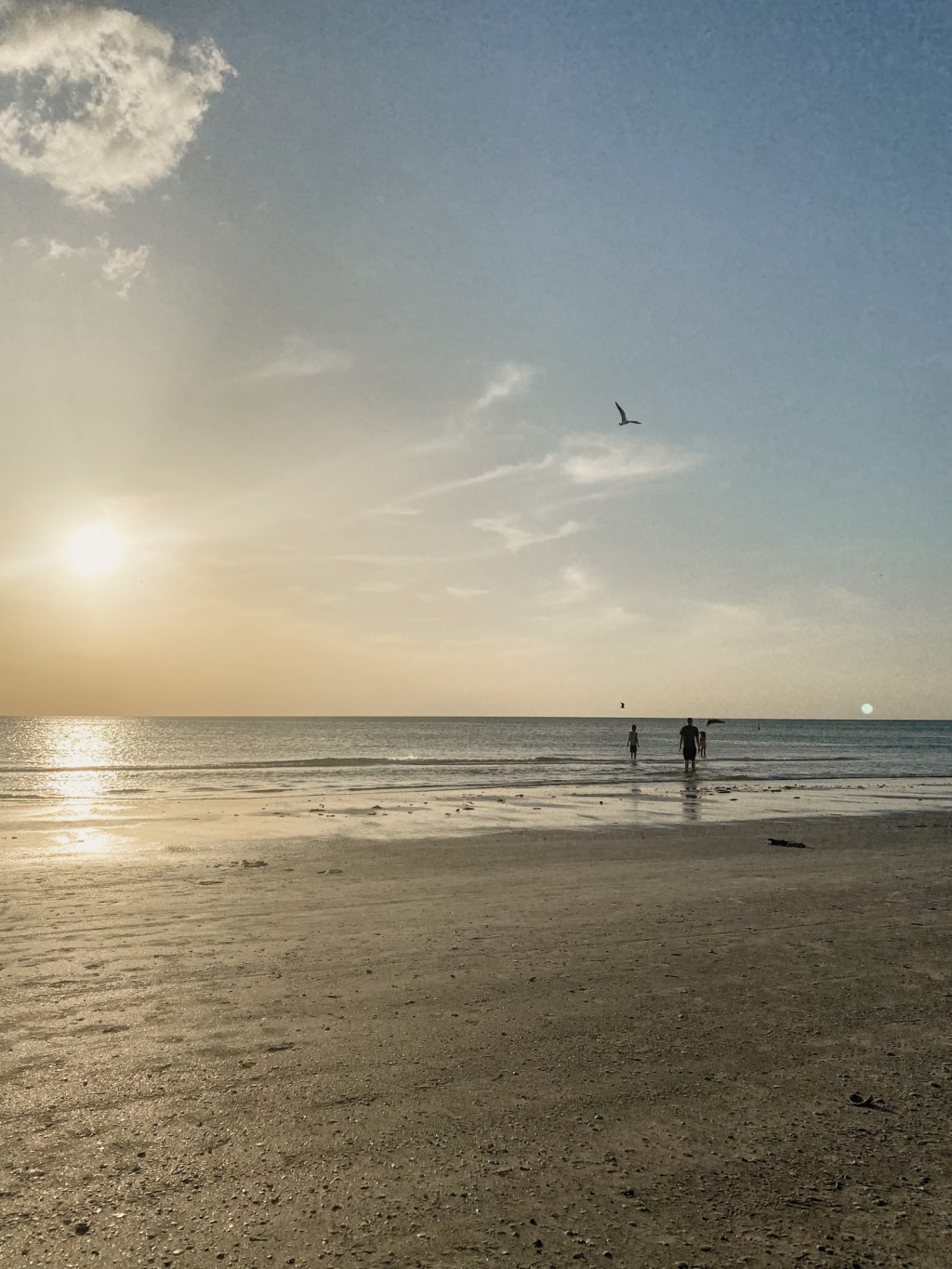
Because we sailed too close to the shore.Disturb us, Lord, when
With the abundance of things we possess
We have lost our thirst
For the waters of life;
Having fallen in love with life,
We have ceased to dream of eternity
And in our efforts to build a new earth,
We have allowed our vision
Of the new Heaven to dim.Disturb us, Lord, to dare more boldly,
To venture on wider seas
Where storms will show your mastery;
Where losing sight of land,
We shall find the stars.We ask You to push back
The horizons of our hopes;
And to push into the future
In strength, courage, hope, and love.-Sir Francis Drake
The definition of disturb is “to interfere with the normal arrangement or functioning of” (Oxford). It comes from the latin turba, meaning “tumult”. Think: tumultuous- like a ship rocking on a wave-filled sea.
Why would we want to be disturbed? Why is this prayer for God to disturb us so important?
Well, simply, if this life is the ship and the sailing is always smooth, why would we dream of another life? Why would we care to know and trust the Maker of the sea?
Contrary to many prayers we hear (and pray ourselves) today, the greatest accomplishment or blessing in life is not perfect stability and safety. A problem-free life is not what God wills for each of us. “In the world you will have tribulation, but take heart, I have overcome the world” (John 16:33).
If the purpose of life is to glorify God and the most important commands are to love Him with our entire being and to love others as ourselves, life won’t be “smooth”. Full and rich and satisfying and worth-it? Yes. But not easy.
It’s not wrong to pray for things to go well for us- we should pray for this. Jesus said we should ask and that God will give us good things! “For everyone who asks receives, and the one who seeks finds, and to the one who knocks it will be opened. Or which one of you, if his son asks him for bread, will give him a stone? Or if he asks for a fish, will give him a serpent? If you then, who are evil, know how to give good gifts to your children, how much more will your Father who is in heaven give good things to those who ask him!” (Matthew 7:8-11)
When the apostles are arrested, beaten, and threatened (Acts 4), they pray together “Now, Lord, consider their threats and enable your servants to speak your word with great boldness. Stretch out your hand to heal and perform signs and wonders through the name of your holy servant Jesus.”
Notice that they don’t pray for the trouble to stop or to be left alone but rather for boldness to keep going in the midst of the trouble and for God’s power to be shown and seen.
I know that most of us have a far more robust prayer life and closer walk with God during difficult seasons. When my toddler had to have an emergency hernia. When I’ve walked through depths of grief. When my best friend’s marriage was on the verge of divorce. When we weren’t sure if we could pay bills before our next paycheck. Some of you may have tribulations far, far greater than these. It’s in these times that our Savior is truly our only hope, and our hunger for heaven grows strong. It’s also when we see God move powerfully- healing miraculously, providing in ways we never thought possible, restoring what only He could.
This isn’t to say we should wish for tribulation, Paul made a point to speak of being content in all circumstances, with much or with little (Philippians 4:11-13). Rather we are hoping that God will interfere with our lives. That we won’t be left to small dreams when He has greater things in store. That He will make the ordinary extraordinary.
The point is that if we want ease more than Jesus, or security in this life more than eternity, we are on dangerous ground. I know I find myself feeling stale and complacent in prayer and in faith sometimes when life is “comfortable”. This poem speaks to that and asks God to disturb- disrupt, turn over, interfere with- our complacency so we may seek first His kingdom, knowing that when we do that, “all these other things will be added as well” (Matthew 6:33).
A note to my fellow OCD friends (or anyone feeling not-so-sure): I know. I know thinking like this, praying like this, feels like everyone you love is going to die. That’s not happening, that’s not what this is about. God is not waiting for permission to take all you have, He’s not out to see how much hardship you can take. It’s okay to be comfortable; it’s good to enjoy life. Everything good is from God! (James 1:17). He loves good, He made good, He is good. The point of this poem and mindset is to invite His best good rather than the superficial that seems good to us for a moment. Maybe nothing would change in our circumstances for our hearts to love Him more, or maybe he would lovingly uproot us somehow and plant us somewhere better so that His glory may be shown through our lives. This is good. Trusting our loving Savior who gave His life for us will never leave us empty or regretful, He will never take more than He will give.
When our vision becomes small, we ask for Him to interfere, to give us grander dreams that His name may be made great, that the purpose of everything may be realized- and that we may have a part in that!